Your car's temperature gauge creeps up. The needle climbs into the red. Steam rises from under the hood. In Lahore's brutal summer heat, this scene is all too familiar. But you can prevent it and fix it when it happens. Here are the most common causes of car engine overheating and the solutions that work, whether you're stuck in traffic on Ferozepur Road or cruising on Canal Road.
Common Causes of Engine Overheating In Lahore
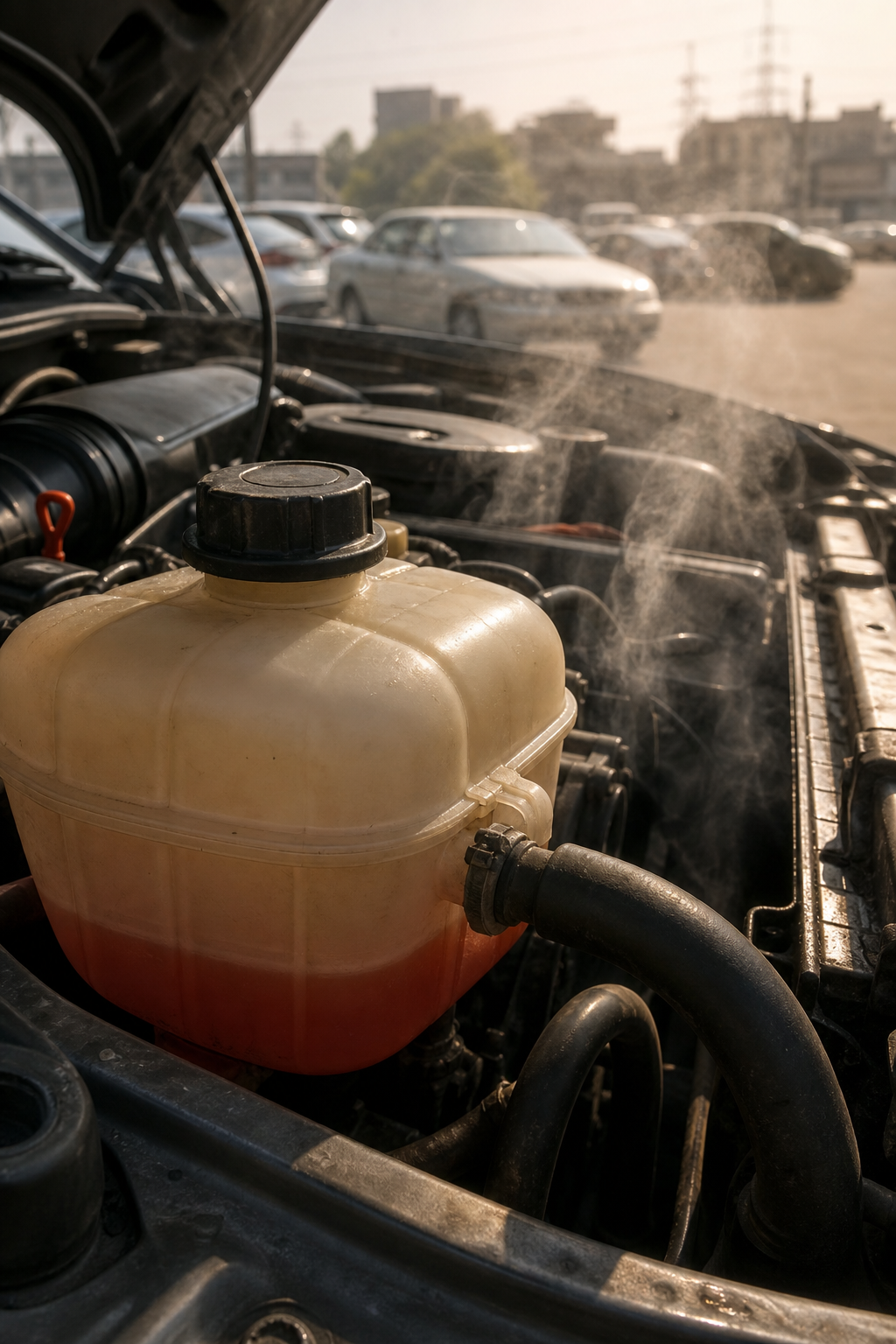
Most overheating problems start with the cooling system. When one part fails, the engine quickly gets too hot. Here are the usual suspects:
Old or Contaminated Coolant
Coolant absorbs heat from the engine and carries it to the radiator. Over time, coolant breaks down. It loses its ability to transfer heat. You might also have a coolant leak from a split hose, a worn radiator cap, or a cracked radiator. The fix? Flush the system and refill with fresh coolant. Check for leaks and replace any damaged parts.
Stuck Thermostat
The thermostat controls how coolant flows between the engine and radiator. If it gets stuck closed, coolant can't reach the radiator. Your temperature needle spikes fast. The only cure is a thermostat replacement. We recommend having a mechanic check it during routine service.
Failing Water Pump
The water pump pushes coolant through the entire system. If the pump's impeller wears out or the drive belt slips, flow stops. The gauge steadily climbs into the red. Engine knocking can also signal overheating damage. Replace the water pump and inspect the belt at the same time.
Radiator Fan or Fan Clutch Failure
At low speeds or in Lahore traffic, your car needs the radiator fan to pull air through the radiator. If the fan motor dies or the fan clutch fails, the engine overheats at idle. Check that the fan spins freely and turns on when the engine gets hot. Repair or replace as needed.
Key Takeaway: Most overheating causes are linked to coolant or airflow. Regular checks catch them early.
How Your Car’s Cooling System Works
Understanding the cooling system helps you spot problems sooner. Your engine runs hot by design; combustion creates huge heat. The cooling system keeps it at a safe temperature. Here are the main parts and what they do:
This system works together. When one part fails, the whole system struggles. That's why a professional inspection at AutoSpot.pk's inspection service can catch multiple issues at once.
Driving Habits and Local Conditions That Trigger Overheating
Lahore makes your car work harder. The intense summer heat, stop-and-go traffic on Mall Road, and constant AC use push your cooling system to the limit. Here's how your driving habits matter:
Sitting in Traffic with the AC On
When you're moving, air flows through the radiator naturally. But in traffic, your fan has to do the work. If the fan is weak or the system is low on coolant, the engine temperature rises. Turning off the AC can reduce the load.
Ignoring the Temperature Gauge
Many drivers see the needle rise but keep going. That small oversight can warp the cylinder head or blow the head gasket. When the gauge moves into the red, pull over safely and let the engine cool.
Skipping Regular Maintenance
Lahore's roads are dusty. Your radiator collects dirt and bugs. Old coolant turns acidic. Regular oil changes and coolant flushes keep things running cool. It's cheap compared to an engine rebuild.
Pro Tip: Before summer hits, have your cooling system checked. A simple flush and refill can save you from a roadside breakdown.
Car overheating in Lahore is especially common because of the heat and traffic. Being proactive is your best defense.
How to Diagnose an Overheating Problem
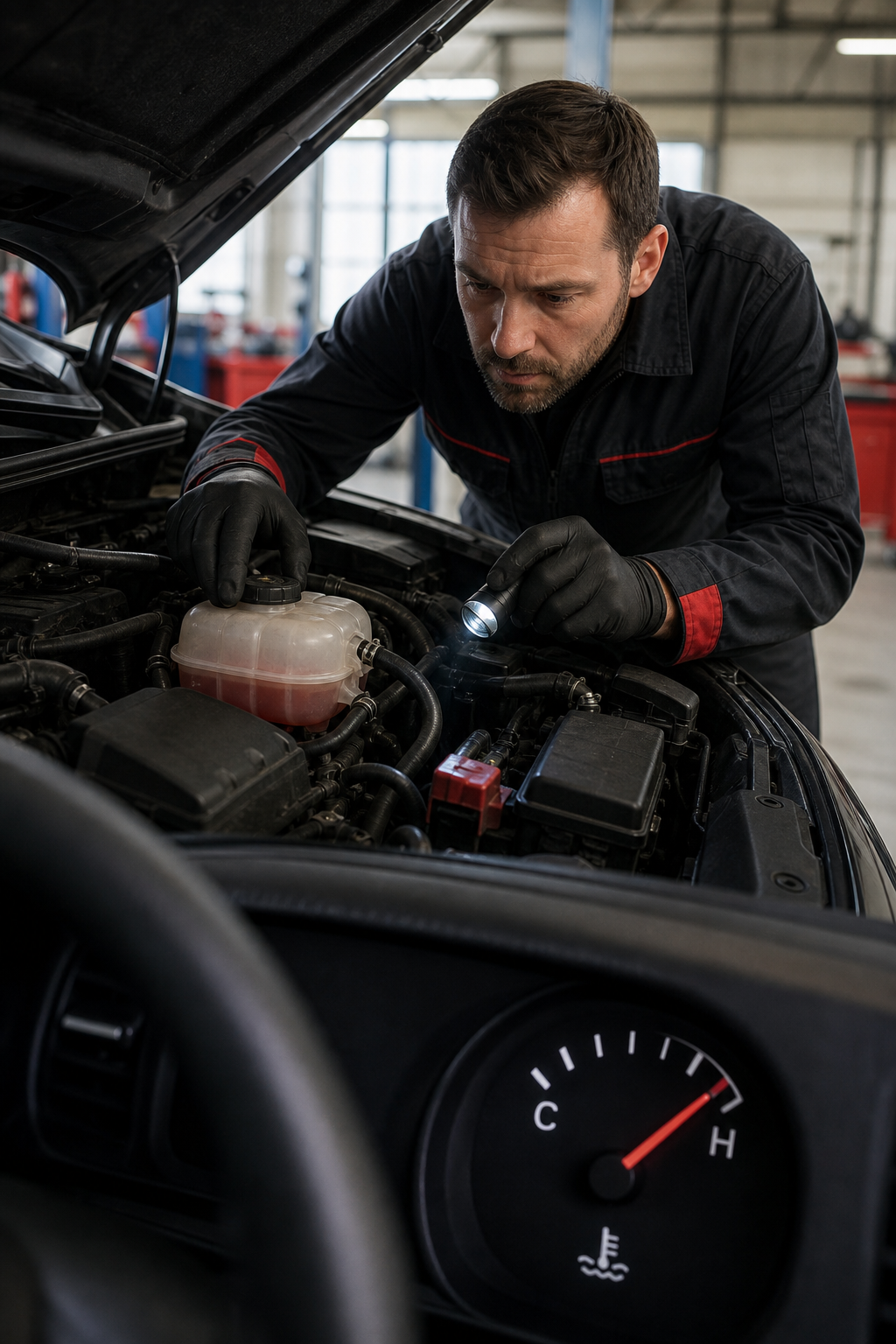
Before you improve your car to a shop, you can do some basic checks yourself. This helps you describe the issue to a mechanic. Follow these steps:
- Check the coolant level. Wait until the engine is cool. Open the reservoir or radiator cap. The coolant should be at the full mark. If it's low, you have a leak or burn-off.
- Look for visible leaks. Check for puddles under your car. Look at hoses for cracks or bulges. Check the radiator cap for damage.
- Check the fan. With the engine running and idling, see if the fan turns on. If not, the fan motor or relay might be bad.
- Feel the hoses. Squeeze the upper and lower radiator hoses. They should feel firm but not rock hard. A collapsed hose means a blockage.
- Watch the temperature gauge. Does it spike suddenly or rise gradually? Sudden spikes often point to a stuck thermostat or pump failure.
If you're not sure, bring your car to AutoSpot.pk for a thorough inspection. We use advanced diagnostic equipment to find the exact cause.
Solutions: When to DIY and When to Visit a Mechanic
Some overheating fixes are straightforward. Others require a professional. Here's a guide:
DIY-able Tasks
- Topping off coolant, if it's just a little low, add the correct type.
- Replacing a loose hose clamp, tighten or replace if it's leaking.
- Cleaning debris from the radiator, gently wash fins with a hose.
When to Call a Mechanic
- Checking the thermostat needs removal and testing.
- Water pump replacement involves belts and the coolant system.
- Radiator fan repair, electrical diagnostics.
- Persistent overheating could be a blown head gasket or internal damage.
At AutoSpot.pk's mechanical repair shop, we handle all these jobs. We use genuine parts and give you an honest diagnosis. Don't keep driving with a hot engine , it only gets more expensive.
"A small coolant leak today can become a new engine tomorrow. Don't wait." - Someone with a blown head gasket, probably.
Frequently Asked Questions
Why does my car overheat in traffic but not on the highway?
At highway speeds, airflow cools the radiator. In traffic, the radiator fan must do the work. If the fan or cooling system is weak, the engine overheats at idle.
Can I drive my car if it's overheating?
No. Driving an overheating car can cause permanent engine damage. Pull over, turn off the AC, and let it cool. Call a mechanic.
How often should I change my coolant?
Most manufacturers recommend every 2-3 years or 30,000-60,000 km. In Lahore's heat, it's wise to check it annually.
What causes a car to overheat in cold weather?
Cold weather doesn't prevent overheating. A stuck thermostat, low coolant, or a faulty water pump can still cause overheating even when it's cold outside.
How much does it cost to fix an overheating engine in Lahore?
Cost depends on the cause. A coolant flush might cost a few thousand rupees, while a water pump replacement runs higher. A full diagnostic is the first step.
Is it safe to add water instead of coolant?
In an emergency, water works temporarily. But it lacks the anti-corrosion and anti-freeze properties of coolant. Flush and refill with proper coolant as soon as possible.
Conclusion
Car engine overheating is a clear warning you shouldn't ignore. Most causes are simple: low coolant, a bad fan, or a stuck thermostat. Catch them early, and you save money and hassle. For Lahore drivers, regular checks before summer are a must. If your car's temperature needle acts up, bring it to AutoSpot.pk. We'll find the real problem and fix it right. Don't let overheating ruin your day, or your engine.