
Imagine this: you are on a long journey, driving peacefully, enjoying the scenery, and hoping to reach your destination on time.
But suddenly, you hear a strange metallic pinging or rattling sound coming from the engine.
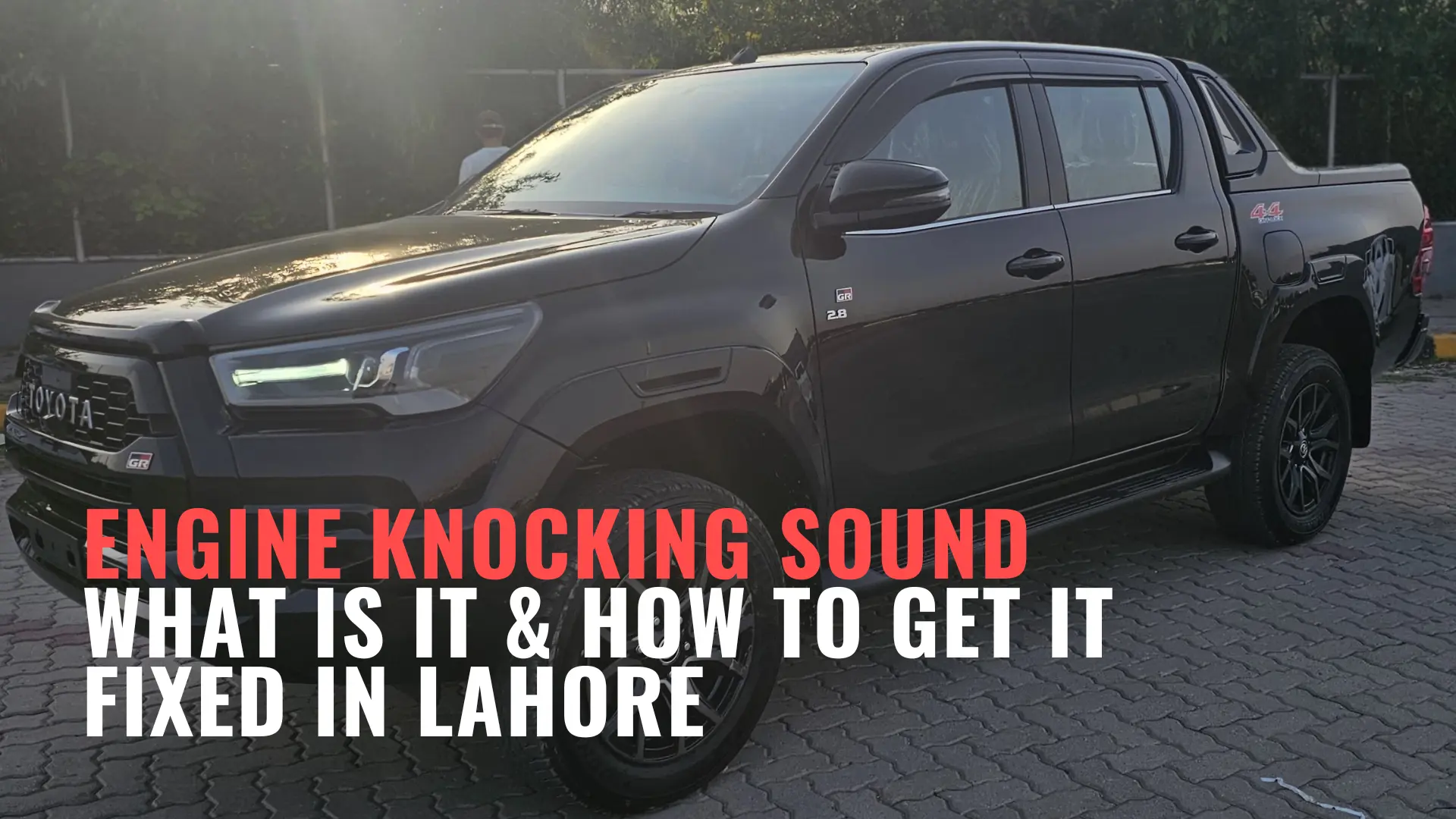
This is known as the engine knocking sound, and it is not something you should ignore.
Engine knocking usually sounds like a pinging, tapping, or knocking noise (think of metal lightly striking metal inside the engine).
The sound is often loud enough to alert you that something is wrong (unless you are listening to loud music)
Engine knocking is most commonly noticed:
- During acceleration
- When driving uphill or under a heavy load
- During cold starts or extremely cold weather
Bonus Tip: If you notice the engine knocking under these conditions, have your vehicle inspected for any issues as soon as possible.
7 Reasons Why Your Car Engine is Knocking
Here, I have highlighted some key factors contributing to the engine producing knocking sounds.
1. Wrong Fuel Type
With the recent US-Iran war, fuel prices have increased significantly. And Pakistan, including Lahore, has felt the impact.
As a result, some car owners try to cut costs by opting for low-quality fuel. While this may seem like a smart decision, it can lead to serious engine issues in the long run.
For instance, regular petrol in Lahore (Rs 366 per liter) is cheaper than high-octane fuel (Rs 535 per liter). However, using regular fuel in a car designed for high-octane fuel can disrupt combustion, which leads to engine knocking.
If your car requires high-octane fuel, do not fill the tank with low-quality fuel, and vice versa. This can do serious damage to the engine and may damage your car’s head gasket.
2. Overheated Engine
On hot summer days in Lahore, your car’s engine is also exposed to extreme heat, which can affect its overall performance. When the engine temperature rises beyond normal levels, it disrupts the combustion process inside the cylinders.
This imbalance leads to a metallic knocking or pinging sound from the engine. In simple terms, overheating prevents smooth combustion of fuel and increases stress on internal components.
That’s why an overheated engine is a common cause of engine knocking and should not be ignored.
3. Delayed Oil Changes
This is a common mistake many car owners make. Delaying routine inspections and oil changes can affect multiple engine components and increase the chances of engine knocking.
Old oil cannot properly lubricate the engine, which leads to increased friction and heat. Over time, this can damage your vehicle’s internal parts and even blow its head gasket.
While regular oil changes may seem expensive, they can prevent serious damage in the long run.
4. Worn-Out Piston Rings
Piston rings play a key role in maintaining proper compression. However, like most engine components, they wear out over time due to constant use and heat.
If left unchecked over a long time, these pistons lose their effectiveness, leading to a knocking sound. Visit the nearest car repair shop to fix this as soon as possible.
5. Bad Spark Plugs
Spark plugs play an important role in igniting the fuel-air mixture inside the engine. When they are working properly, the combustion process stays smooth.
But what if the spark plugs are too old or malfunctioning? This leads to problems with the fuel ignition process and can cause the engine to produce knocking sounds.
6. Advanced Ignition Timing
Advanced ignition timing isn’t always good for your engine. It simply means the spark plug fires earlier than the standard timing. While this setting can improve performance and fuel efficiency to some extent, pushing it too far can create problems. Because early ignition can cause the fuel-air mixture to burn too soon, it can lead to uneven pressure inside the engine.
To summarize, excessively advanced timing can cause engine knocking and may lead to serious damage if not corrected.
7. Excessive Carbon Build-Up
Sometimes, fuel doesn’t burn completely in your car’s combustion chamber and leaves behind carbon deposits. This build-up reduces efficiency and disrupts smooth combustion inside the cylinders.
As a result, it can lead to engine knocking, which is something you definitely want to avoid.
Is Engine Knocking Sound Dangerous for Your Car? [Short Answer: Yes]
Let’s take a detailed look at what engine knocking can do to your car:
- Causes Serious Piston Damage: It’s well-known that continuous knocking puts pressure on internal components, especially the pistons. And over time, this can lead to cracks or complete failure.
- Leads to Engine Failure: If ignored for a long time, minor knocking can turn into major engine damage. Even worse, sometimes it causes a complete engine breakdown or a damaged head gasket.
- Reduces Fuel Efficiency: Engine knocking sound also means your engine burns more fuel than necessary. And you will have to spend a lot more on fuel.
What Does All This Mean for Your Wallet
The following numbers will give you an idea of why timely engine inspection is necessary:
- Fixing small issues (i.e., replacement of spark plugs): Rs 2500 - 12000 (Depending on the engine model and type of plugs)
- Complete Engine Overhaul: More than Rs 80,000 in most cases
How to Prevent Engine Knocking in Your Car
Here are some simple tips to reduce the chances of your engine producing that knocking sound:
1. Regularly Change Your Car’s Oil
Engine oil is essential to keep all the internal components of your car working smoothly.
But what happens if you don’t change the oil for a long time? This is what happens: it gets dirty and can lead to the engine producing the knocking sound.
Therefore, it is recommended that you follow a regular schedule for changing the oil (to keep your engine in good condition).
Bonus Tip: Always use regular, proper oil recommended by the vehicle manufacturer. If you are unsure, refer to the car’s manual, or you can join AutoSpot’s WhatsApp group for information related to engine oil or any other car component!
2. Use the Correct Fuel Type
The type of fuel your car needs depends on its engine. Using the wrong fuel, especially low-octane fuel in a turbocharged or high-performance vehicle, can lead to engine knocking. To avoid this situation, always use the fuel recommended by your car’s manufacturer. You can easily find this information in your vehicle’s owner's manual.
Still Hearing the Engine Knocking? Visit AutoSpot In Lahore Today for a Quick Checkup
While prevention tips are essential to avoid the engine producing the knocking sound, they don’t always work.
Sometimes, the only option left is visiting the car mechanic to fix this issue.
And if you are in Lahore, you can visit AutoSpot auto repair shop to fix the engine knocking today.
You don’t even have to visit the shop yourself. We can pick up and drop off your vehicle from anywhere in Lahore!
Just fill this form out or give us a call at +92-331-4899966.
Frequently Asked Questions (FAQs)
1. Why is engine knocking dangerous for my car?
Engine knocking can cause damage to key components of your car. If ignored for a long time, your vehicle may require a complete engine overhaul.
2. Can I still drive my car with the engine knocking?
Yes, but it is not recommended to ignore this issue for long. Driving despite the engine knocking can cause more damage and lead to costly repairs.
3. Which fuel is best for my car in Lahore?
For Regular cars: Standard petrol works fine
For Luxury/turbo cars: Use high-octane fuel
If you are unsure, check your car’s manual.
4. How much do I have to pay to fix engine knocking in Lahore?
Repair costs depend on the condition of the car’s engine. It’s best to get in touch with a car workshop, like AutoSpot, for an exact quotation.