
If your A/C is blowing warm air on a scorching day, you're not alone. There are a handful of common culprits that can turn your ride into a sauna. Let's start with the quick checks and fixes that can get that cool breeze back, without guessing.
Your car's AC can stop cooling for reasons most drivers never consider, from a simple cabin-air-filter clog to the vehicle's hybrid EV mode shutting the system off entirely. In this article, we'll walk through 11 reasons why your car AC is not cooling, from the most common to the more hidden ones. We'll explain what to look for and when it's time to call in a pro. At AutoSpot.pk, we've seen it all, and we're here to help you stay cool.
1. Low Refrigerant (Freon/AC Gas) Levels
Low refrigerant is the number one reason why your car AC is not cooling. Over time, every system loses a tiny bit of refrigerant/gas through seals, it's normal. But if you're low, the compressor may not engage at all, or the air will be barely cool.
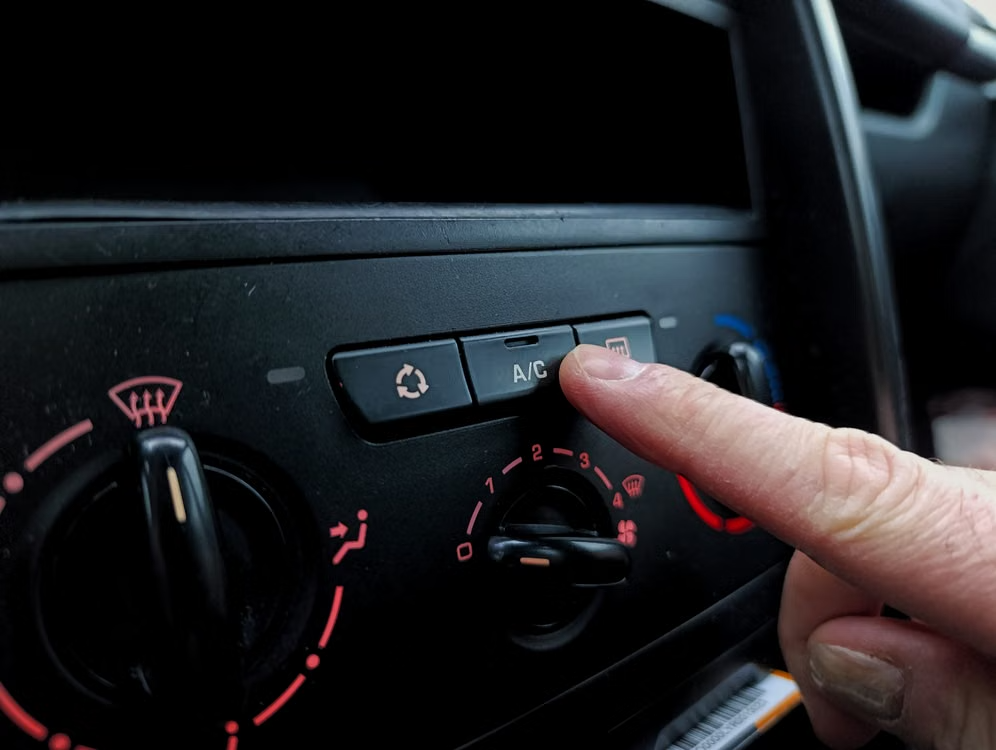
You can check by looking at the AC compressor clutch. With the engine running and AC on, watch the front of the compressor. If the clutch isn't spinning, it could be low refrigerant. Another sign: you feel air flow, but it's not cold.
If you have a gauge set, connect it to the low-pressure port. Normal low-side pressure at idle should be 30-40 psi. If it's below that, you need refrigerant. However, adding refrigerant isn't always a permanent fix. If you're low, you probably have a leak.
Many auto parts stores sell refrigerant cans with a gauge. Use them carefully. But remember: overcharging your system can cause damage. According to the EPA's MVAC regulations, it's actually illegal to vent refrigerant into the atmosphere. So if you're not comfortable, let a shop handle it.
Pro Tip: If you add refrigerant and your AC works for a season but stops cooling again, you definitely have a leak. Bring it to a shop like AutoSpot.pk for a proper leak check and repair.
Low refrigerant can also cause the compressor to cycle on and off rapidly. That's called short cycling. It wears out the compressor faster. So don't ignore it.
One more thing: if you own a hybrid or electric vehicle, the AC may not run when the engine is off. That's a different issue we'll cover later. But for now, if your AC is just not cold, start here.
2. Refrigerant Leaks
If you're low on refrigerant, 9 times out of 10, there's a leak somewhere. Leaks can happen at any connection, seal, or component. Common spots include the compressor shaft seal, condenser, hoses, and evaporator.
How do you find a leak? You can buy a UV leak detection kit. Add dye to the system, run the AC, then use a UV light to see where it glows. Another method is a soapy water spray; bubbles at a connection mean a leak.
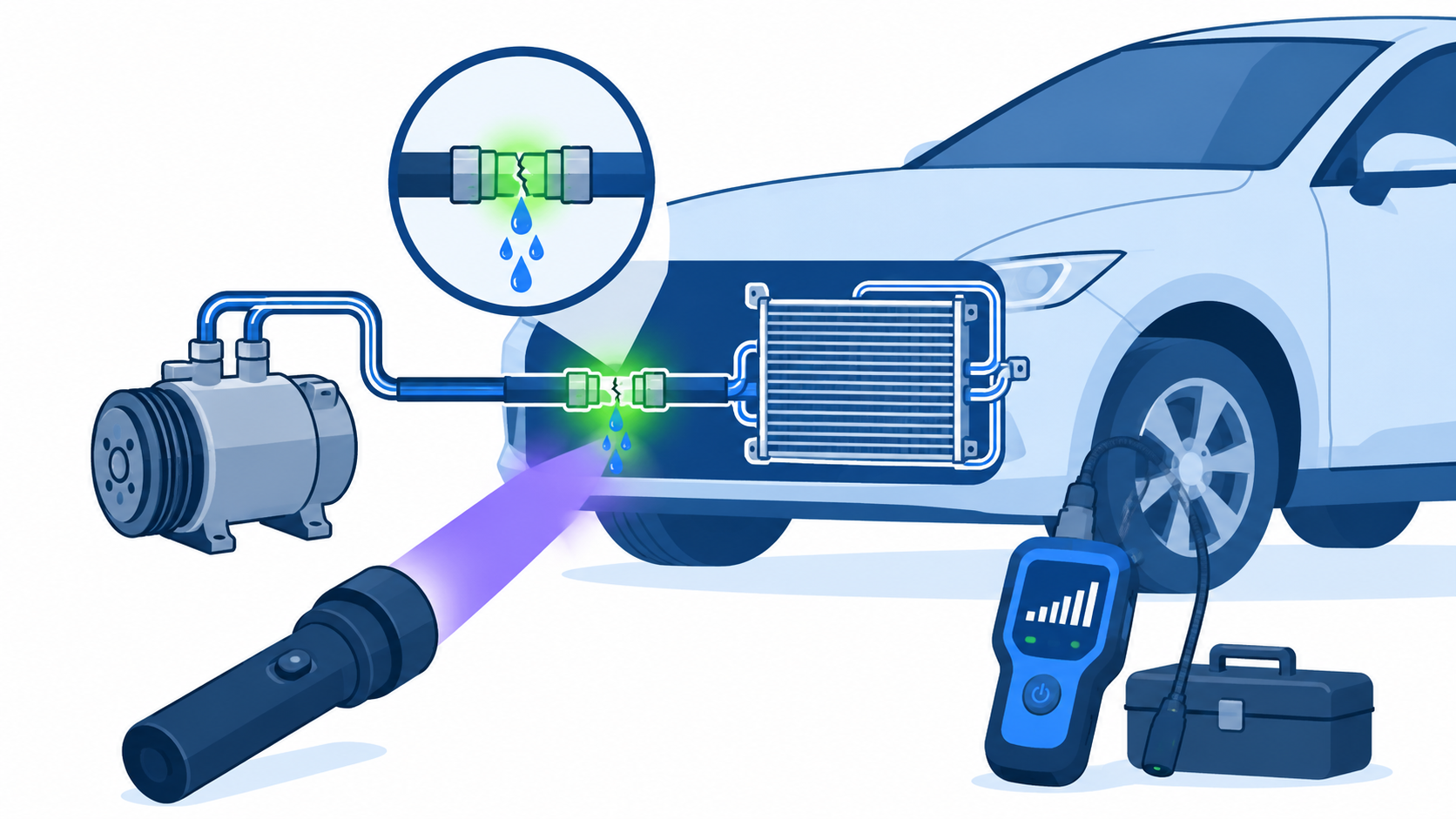
Many shops use electronic leak detectors. They're sensitive and find tiny leaks. At AutoSpot.pk, we use professional tools to pinpoint leaks quickly.
Key Takeaway: If your car AC is not cooling and you need to add refrigerant every year, you have a leak. Fixing the leak saves money in the long run.
Small leaks might be fixed by replacing an O-ring or a hose. But if the evaporator (inside the dashboard) is leaking, that's a big job. The dashboard has to come out. That's why it's important to diagnose correctly.
Remember: refrigerant is a greenhouse gas. Leaks harm the environment. The EPA requires proper handling. If you suspect a leak, take it to a certified shop.
Also, in hybrid vehicles, the AC system runs on high-voltage electricity. That adds complexity. Only trained technicians should work on those high-voltage lines.
So if your car AC is not cooling and you've checked the refrigerant level but it's low, you've got a leak. Time to find it and seal it.
3. Clogged Cabin Air Filter
Your cabin air filter cleans the air coming into the car. When it gets clogged with dust, pollen, and leaves, airflow drops. You might still get some cold air, but it's weak. This is a simple fix.
The filter is usually behind the glove box or under the hood. Check your owner's manual for the location. Remove it and hold it up to the light. If you can't see through it, replace it.
A dirty filter can also make your AC smell musty. That's from moisture and bacteria. So changing the filter helps with both cooling and smell. Most manufacturers recommend changing the cabin air filter every 20,000 to 30,000 km, or once a year. If you drive on dusty roads like those outside Lahore, change it more often.
Don't skip this cheap maintenance. A new filter costs about 1000-2000 PKR. Meanwhile, your AC works harder with a clogged filter, which could lead to other problems like a frozen evaporator.
After replacing the filter, test the AC. If airflow is strong and the air is cold, you've solved the issue. If not, move on to the next reason.
4. Faulty Compressor or Clutch
The compressor is the heart of your AC system. It compresses refrigerant and pushes it through the system. If the compressor fails, your car's AC will not cool at all.
There are two main failure modes: the compressor itself seizes, or the clutch doesn't engage. The clutch is an electromagnetic device that connects the compressor to the drive belt.
To test the clutch, with the engine running and AC on, watch the compressor. You should see the clutch engage and the center plate spin. If it doesn't, it could be an electrical problem (fuse, relay, wiring) or the clutch coil is bad.
You can test the clutch coil with a multimeter. Disconnect the electrical connector and measure resistance. It should be between 2 and 5 ohms. If out of spec, replace the clutch or compressor.
You can also power the clutch directly from the battery. If it clicks and spins, the clutch is good. Then the problem is elsewhere.
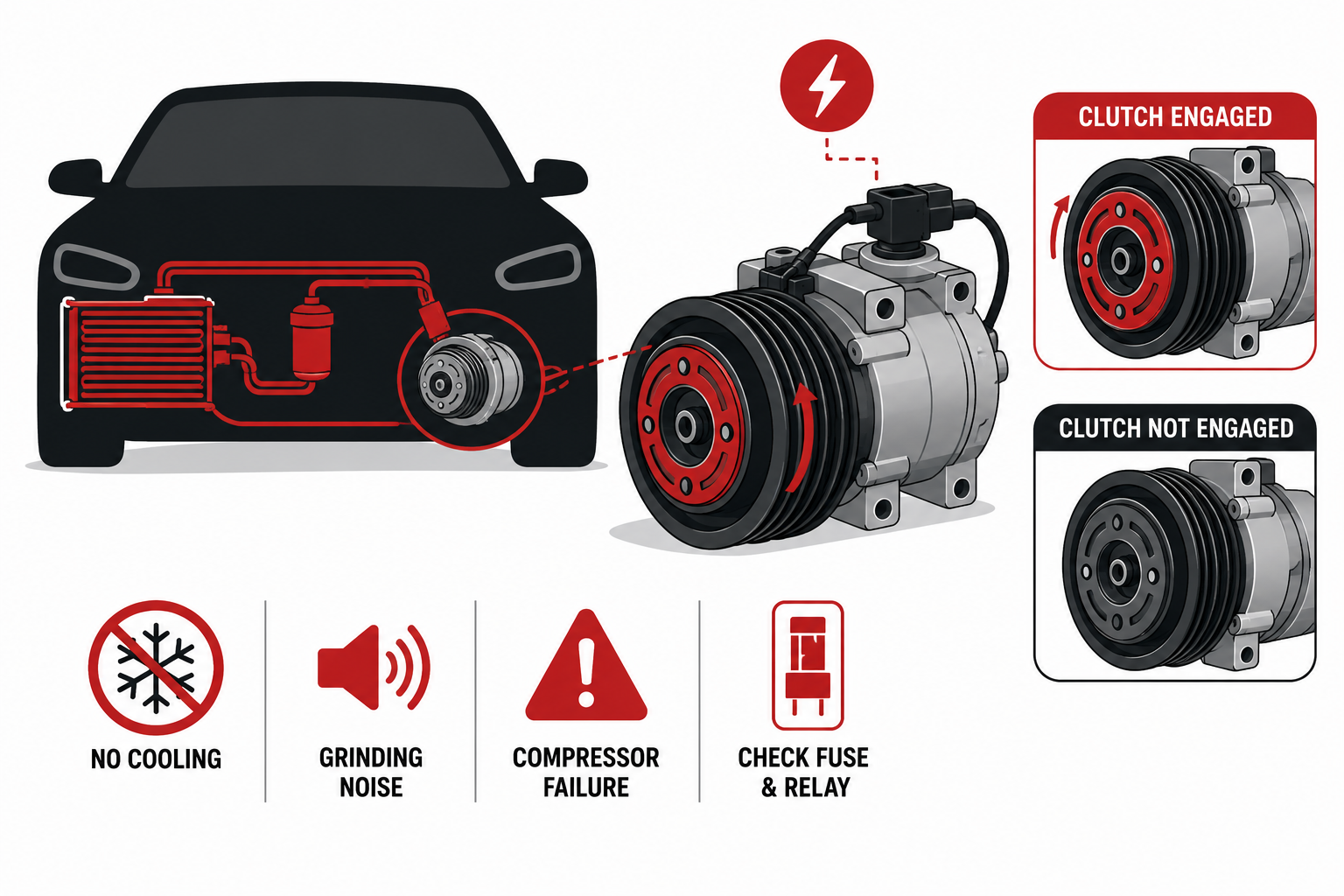
If you hear a grinding noise when the AC is on, the compressor bearings might be failing. That's bad news. Eventually, it will seize and break the serpentine belt.
Compressor replacement is expensive. The part itself costs several thousand PKR, plus labor and refrigerant. That's why we always recommend a thorough diagnosis first.
Sometimes a compressor fails because of contamination from a previous failure. Always replace the receiver/drier or accumulator when replacing a compressor. And flush the system to remove debris.
If your car AC is not cooling and the compressor clutch won't engage, check the basics first: refrigerant pressure, fuses, and relay. Then test the clutch coil.
5. Blown Fuse or Bad Relay
Electrical issues are common when your car AC is not cooling. The AC system has fuses and relays that control power. If a fuse blows or a relay fails, the compressor won't get power.
First, locate your car's fuse box. It's often under the hood or under the dash. The owner's manual will tell you which fuse is for the AC compressor and the blower motor.
Pull the fuse and look at the metal strip. If it's broken, replace it with one of the same amperage. Never use a higher amp fuse; it could cause a fire.
If the new fuse blows immediately, there's a short circuit somewhere. That needs professional diagnosis.
The relay is a bigger switch. You can swap the AC relay with a similar one (like the horn relay) to test. If the AC starts working, the relay is bad. Buy a replacement at any auto parts store.
Another electrical problem: a bad AC pressure switch. That's covered in a later section. But often, a simple fuse or relay is the culprit.
We've seen many cars where the AC stops working because of a corroded connector. Check the wiring to the compressor for damage or rust.
If you're not comfortable with electrical testing, any good shop can check the circuit in minutes. At AutoSpot.pk, we use a test light and multimeter to quickly find the problem.
So before you assume the worst, check the fuses and relays. It's a cheap and easy fix if that's the issue.
6. Blower Motor Failure
The blower motor pushes air through the vents. If it fails, you get little or no airflow. The AC might be cold, but you can't feel it. That's a common reason your car AC is not cooling effectively.
If the blower doesn't work at all, check the fuse first. If the fuse is good, the motor itself may be dead. Sometimes the motor works on high speed but not low, that's often a bad blower motor resistor.
The resistor controls the fan speed. It can overheat and fail. You can buy a new resistor cheaply. But sometimes the resistor fails because the motor is drawing too much current. So if you replace the resistor and it blows again, replace the motor too.
You can test the blower motor by applying 12 volts directly from the battery. If it spins, the motor is fine and the problem is in the switch or resistor.
Another issue: debris like leaves can get into the blower housing and jam the fan. You might hear a rattling noise when the fan is on. That's an easy fix, remove the debris.
If the blower motor is bad, replacement is straightforward on most cars. The cost varies. Labor plus part might be a few thousand rupees.
If your car AC is not cooling because airflow is weak, check the blower motor. A simple test: turn the fan to high and listen. If you hear the motor but airflow is low, the cabin filter might be clogged. We covered that earlier.
7. Expansion Valve or Orifice Tube Problems
The expansion valve (or orifice tube) is a metering device. It controls how much refrigerant enters the evaporator. If it's stuck or clogged, the AC won't cool properly.
Symptoms: the AC blows cold then warm, or never gets very cold. You might see frost on the expansion valve or evaporator inlet. The low-side pressure might be very low or very high.
On systems with an orifice tube, a clog can happen if debris circulates. That's why many cars have a filter in the liquid line. If the orifice tube clogs, it needs to be replaced and the system flushed.
The expansion valve is adjustable. If it fails, it's usually stuck closed or open. Stuck closed: no refrigerant flow, compressor high-pressure goes sky-high, AC stops cooling. Stuck open: too much refrigerant flows, evaporator floods and may freeze.
Diagnosing these requires AC gauges and experience. Low-side pressure should be around 30 psi, and high-side pressure around 200-250 psi when working properly. If they're way off, suspect the expansion device. Replacing an expansion valve requires removing the refrigerant, then opening the system. It's often done at the same time as an evaporator replacement because they're near each other.
If your car's AC isn't cooling, it's best to take it to a professional.
8. Evaporator Coil Issues
The evaporator is inside the dashboard. It's where refrigerant absorbs heat from the cabin air. If the evaporator gets clogged with dirt or starts leaking, your car AC is not cooling.
A leaking evaporator is common in older cars. The metal can corrode. You might see a sticky residue on the passenger floor (refrigerant oil mixed with UV dye). The AC will cool poorly and need refrigerant often.
Replacing the evaporator is a big job. The dash has to come out. It can take a full day. That's why many shops quote high labor costs. But if the evaporator is leaking, there's no shortcut.
A clogged evaporator is less common. If the cabin air filter hasn't been changed, dirt can build up on the evaporator fins, reducing heat transfer. The AC may still run but the air won't get as cold.
You can try cleaning the evaporator with a special foam cleaner. But it's tricky without removing parts. A professional A/C clean might help.
Another issue: a frozen evaporator. This happens if the system is low on refrigerant or if the blower motor is weak. The evaporator gets too cold and freezes, blocking airflow. Turn off the AC for a while to let it thaw, then check the refrigerant level.
If your car AC is not cooling and you've tried other fixes, the evaporator might be the problem. It's a more involved repair, but necessary.
9. Blend Door Actuator Failure
The blend door actuator controls whether air goes through the heater core or the AC evaporator. If it fails, you might get hot air when you want cold, or vice versa.
Sometimes you hear a clicking noise behind the dash when you change temperature settings. That's the actuator gear stripped. The door might be stuck in one position.
This is a common failure on many car brands. The fix: replace the actuator. It's a small electric motor with plastic gears. Cost is moderate, but labor depends on how accessible it is. Some cars require dash removal, others are behind the glove box.
You can test it: listen for the actuator moving when you turn the temperature knob. If you don't hear it, it's likely broken. Also, if the driver side blows cold and passenger side hot, the actuator might be fine but there's a separate issue like low refrigerant in one circuit.
On dual-zone systems, there are multiple actuators. Diagnosing which one is bad takes some probing.
If your car AC is not cooling but you feel airflow, and the temperature doesn't change when you adjust it, suspect the blend door actuator. At AutoSpot.pk, we use scan tools to command the actuator and see if it responds.
Sometimes you can manually move the door if you can access it, but that's temporary. Replace the actuator for a permanent fix.
10. Pressure Switch Malfunction
The AC system has pressure switches that protect the compressor. A low-pressure switch prevents the compressor from running if the refrigerant is too low. A high-pressure switch shuts it off if the pressure gets too high.
If either switch fails, the compressor won't engage. That's a common reason why your car AC is not cooling even if the system is fully charged.
You can test the switches: on the AC lines, you'll find them with two wires. Unplug the connector and jump the two pins with a paper clip. If the compressor starts, the switch is bad. But be careful: if there's actually a high pressure condition, bypassing the switch can cause an explosion. So only do this if you're sure the pressures are normal.
On modern cars, the pressure switches are often built into a sensor that sends a digital signal. Those can't be jumped. Instead, you need a scan tool to read the pressure.
A bad pressure switch can also cause the AC to cycle erratically. It might work sometimes and not others.
Replacement is easy: unplug, unscrew, and install a new switch. Then add refrigerant if needed.
If your car AC is not cooling and the compressor isn't engaging, check the pressure switch first.
11. Condenser or Cooling Fan Problems
The condenser is in front of the radiator. It cools hot refrigerant gas into liquid. If the condenser is clogged with dirt or bent fins, or if the cooling fan isn't working, the refrigerant can't shed heat. Then your car AC is not cooling.
Check the condenser: look for debris like leaves stuck in the fins. Use a garden hose to gently spray it clean. If the fins are smashed flat from an accident, the airflow is reduced.
Also check the condenser fan. Some cars have a separate fan just for the AC, others use the engine fan. Turn on the AC and look. The fan should spin. If not, check the fan fuse or relay.
A faulty fan can cause high-side pressure to skyrocket, triggering the high-pressure switch to shut off the compressor. The AC will work briefly then stop.
Condenser replacement is needed if it's leaking. Condensers can rust through, especially in areas with salted roads. Not common in Lahore, but possible in coastal areas.
If your car AC is not cooling after a long drive, but works at first, the condenser might be overheating. Let it cool down and see if the AC comes back.
At AutoSpot.pk, we can pressure-test the condenser and check fan operation. Sometimes the fan motor wears out. Replacing it is straightforward.
So if you've checked refrigerant levels and the compressor is engaging, look at the condenser and fans.
Frequently Asked Questions
Why is my car AC not cooling but the air blows?
If air blows but isn't cold, the most likely cause is low refrigerant or a failing compressor. Check the compressor clutch. If it's engaging, you might have a refrigerant leak or a clogged expansion valve. Also check the cabin air filter, but that mainly reduces airflow, not temperature. A blend door actuator issue could also mix in hot air.
Can low refrigerant damage the AC compressor?
Yes. Low refrigerant means the oil that lubricates the compressor isn't circulating properly. This can cause the compressor to seize. Additionally, if the compressor runs with low refrigerant, it may overheat and fail. That's why you should address low refrigerant early. Replacing a compressor is expensive, so keep the system charged.
How often should I recharge my car AC?
If your system is sealed and leak-free, you should never need to recharge it. However, normal seepage happens over years. If you need to recharge every year, you have a leak. The EPA says a properly maintained system can last the life of the car. Have your AC inspected annually for leaks and performance.
What does the AC pressure switch do?
The pressure switch monitors refrigerant pressure. There are two common types: low-pressure switch and high-pressure switch. The low-pressure switch prevents the compressor from running if pressure is too low (to protect the compressor). The high-pressure switch shuts off the compressor if pressure gets too high (to prevent bursting). A faulty switch can prevent the compressor from engaging.
Why does my car AC work sometimes and then stop?
Intermittent AC is often due to a low refrigerant charge that triggers the low-pressure switch when pressure drops as the system runs. It cools for a bit, then the compressor cycles off, then on again. Another possibility is a failing cooling fan that lets the condenser overheat, causing the high-pressure switch to cut out. Electrical issues like a bad relay can also cause intermittent operation.
Can a blown head gasket affect my car AC?
Indirectly, yes. A blown head gasket can cause overheating, and engine overheating can affect AC performance. The cooling fans may be taxed, and high coolant temperatures can increase condenser temperatures. However, a blown head gasket itself doesn't directly affect the AC system. If your engine is overheating, have it fixed first, and then test the AC.
What should I do if my car AC is not cooling after a repair?
If your AC stopped working after a repair (like engine work), the technician might have disconnected a wire, damaged a component, or left a vacuum in the system. First, check for obvious things: fuses, relay, and compressor plug. If you don't find anything, return to the shop. It could be a simple oversight like a loose connector.
Is it safe to drive with a broken AC in summer?
While not dangerous for the engine (unless the cooling fan also fails), it can be unsafe for the driver due to heat fatigue, especially in Lahore's summer. Dehydration and heat stress can impair your driving. Additionally, a non-functional AC can affect defogging in winter if the system doesn't engage, reducing visibility. It's best to get it fixed promptly.
Conclusion
We've covered 11 reasons why your car AC is not cooling. From the most common low refrigerant to the less obvious blend door actuator, there's a range of possibilities. The good news is that many of these are fixable with basic tools and a little know-how.
But here's the thing: correctly diagnosing the issue saves you time and money. If you're not comfortable with gauges and electrical testing, it's smart to bring your car to a trusted shop. At AutoSpot.pk in Lahore, we specialize in AC diagnostics and repair. We use professional equipment to find the exact problem and fix it right.
Remember, a well-functioning AC keeps you comfortable and safe. Don't suffer through another hot drive. If your car AC is not cooling, start with the simple checks like fuses and cabin filter, then move on to the compressor and refrigerant. And when in doubt, we're here to help. Visit our workshop or contact us online for an appointment. Stay cool!
For more car maintenance tips, on car overheating in Lahore - it's closely related to AC performance.